SPIELraum
tactile sound • visual objects • atmospheric experience


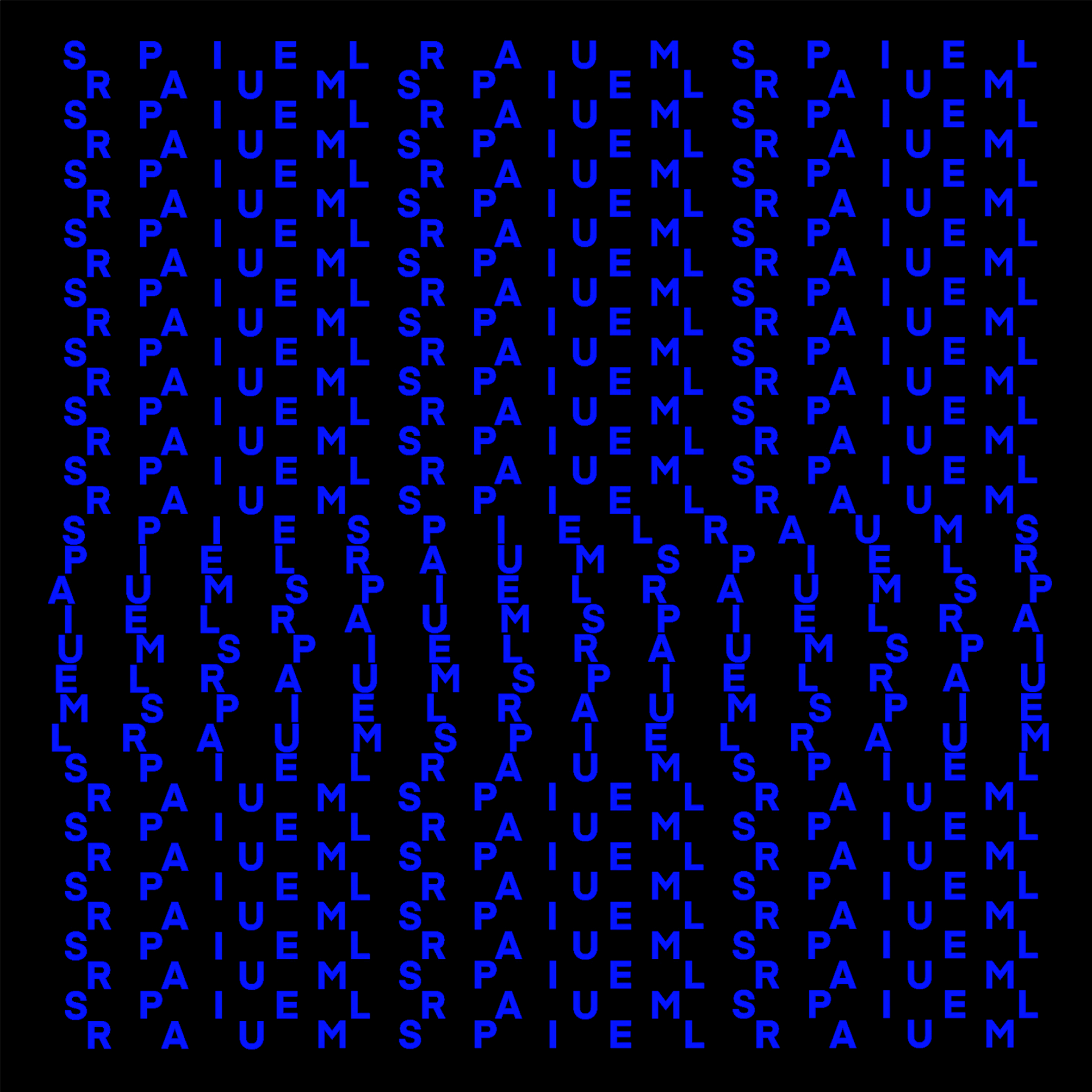
SPIELraum - (German) - “play space” and “a space of possibilities.”
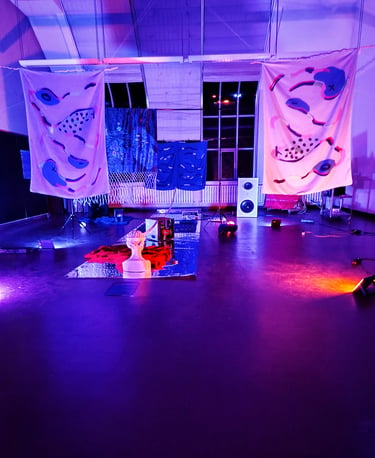
Concept
SPIELraum is a space for the free play of perception and unfolding - a space in which equilibrium naturally emerges as a living process within a continuous flow of movement and change.
Each work within SPIELraum approaches this interplay through its own visual, material, and sensory language. Through signs, rhythms, repetitions, and visual cues, some of the works explore the conscious direction and concentration of attention as part of an open-ended search for balance. They invite attention to turn toward itself, opening a space for perception and freedom within the continuous flow of experience, movement, and change.
Context
The project began as a diploma work at
Bauhaus-Universität Weimar (Germany), Faculty of Art and Design, by Natasha Atmo (2026).
The installation was presented in the Main Building of Bauhaus University Weimar, a UNESCO World Heritage Site.
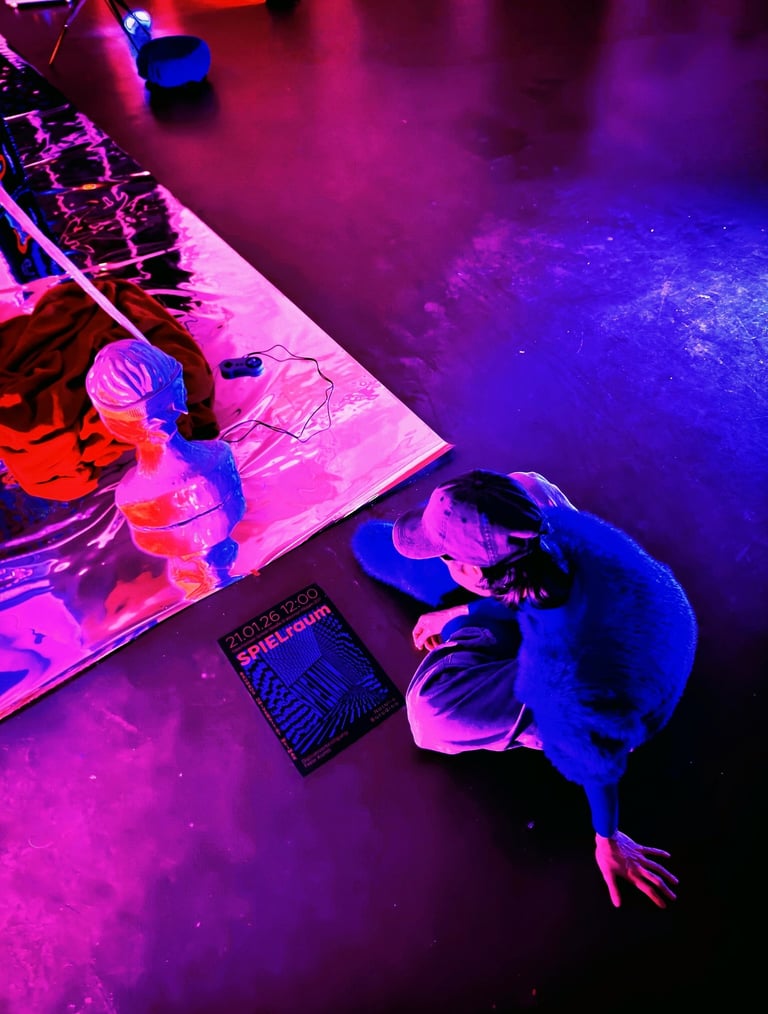
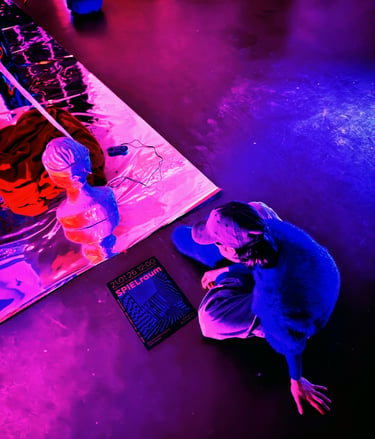
Installation
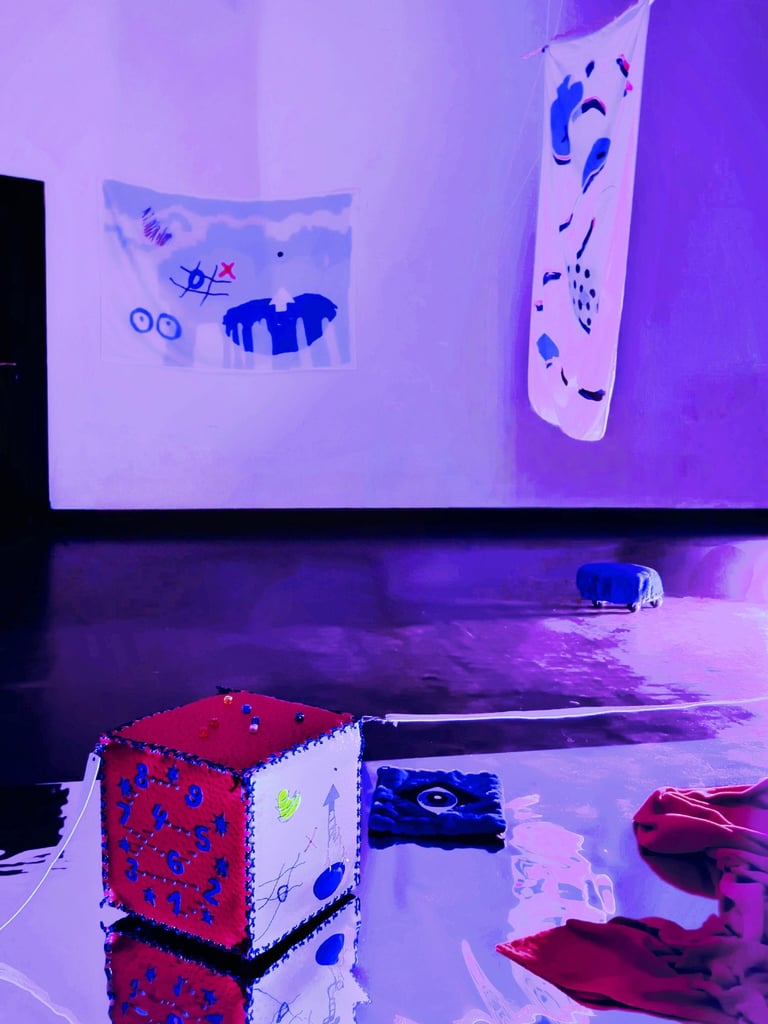
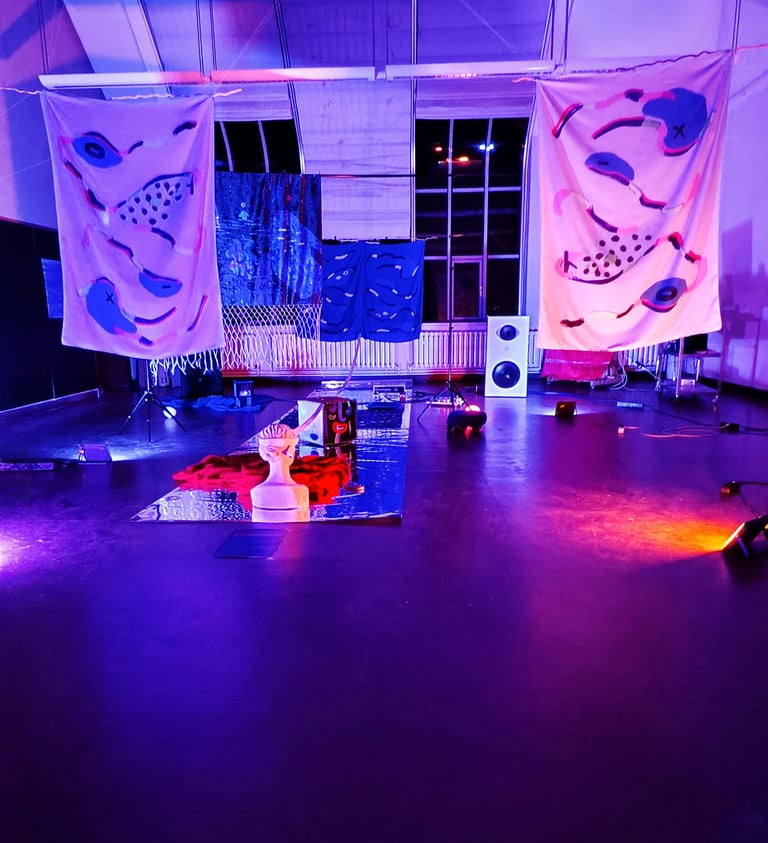
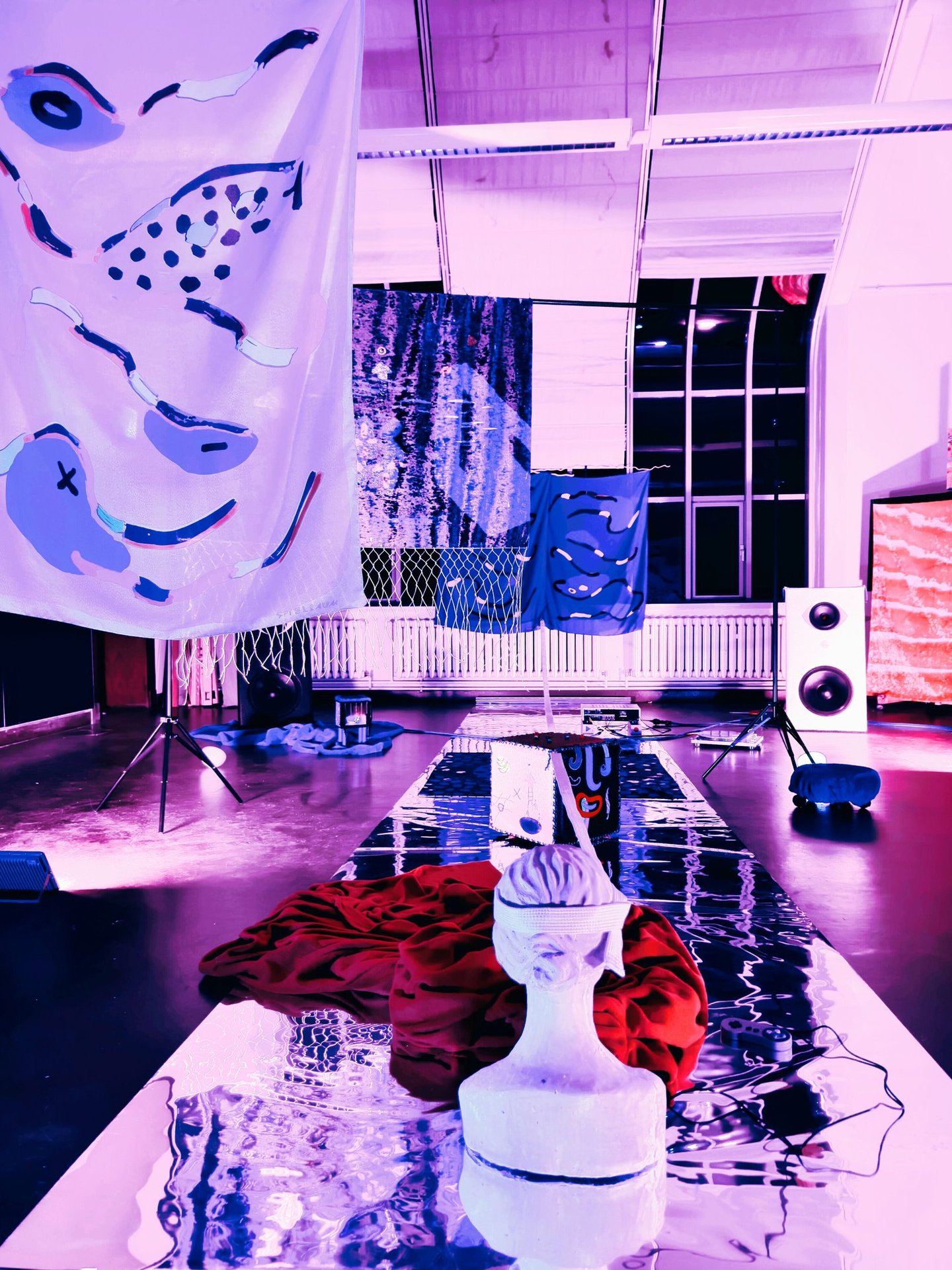
The works - including sound mixes, video projections, spatial objects, and textile pieces - come together as an installation that presents the path of life as a SPIELraum.
The journey begins with a plaster object in the form of a head. Its physical weight echoes the invisible weight of what the mind carries and accumulates over time.
From the object extends a rope shaped like a belt traditionally worn in martial arts. The belt leads toward a set of gates, beyond which something remains deliberately concealed.
Along the way, various obstacles appear - fire, water, and copper pipes, referencing the Russian expression “to go through fire, water, and copper pipes”: to pass through hardship and trials, as well as the temptations of recognition and glory.
These elements become part of a journey in which movement forward is inseparable from the continuous act of balancing on a taut rope.
The installation does not prescribe a particular course of action, nor does it ask the viewer to physically participate or walk the rope. The viewer remains an observer.
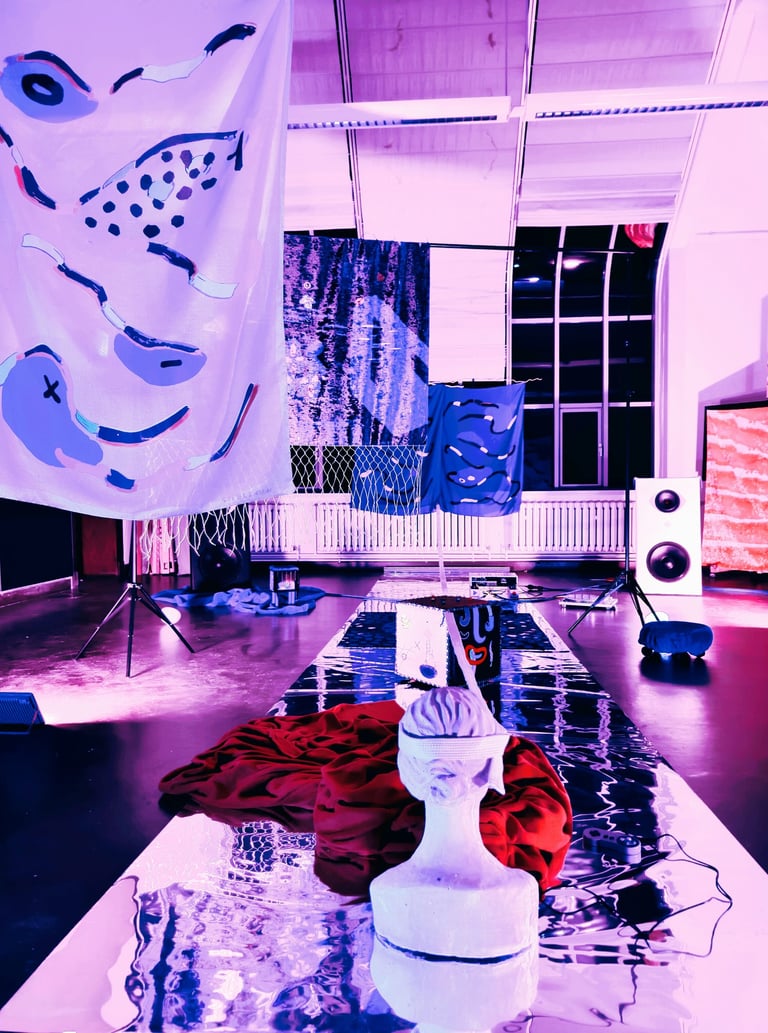
If we view life as a journey through a space of play, where external circumstances are not fatal inevitabilities but tests of resilience for the tightrope walker, then maintaining internal balance becomes crucial to avoid falling. This means not being attached to either nature of the game or external scenarios, not succumbing to emotional provocations, but remaining focused at every moment, like a tightrope walker moving along a stretched rope.
One real-life example and source of inspiration for this installation was an event that took place in 1974: Philippe Petit’s tightrope walk between the rooftops of the Twin Towers of the World Trade Center in Lower Manhattan, New York, at a height of 400 meters above the ground, without safety equipment. He performed for 45 minutes, completing eight crossings of the wire, during which he walked, danced, and even lay down on the rope.